Skip to content

Our story goes beyond soap.

We believe a business can make a product people rely on and, at the same time, change what an ordinary harvest is worth to the people who grew it.
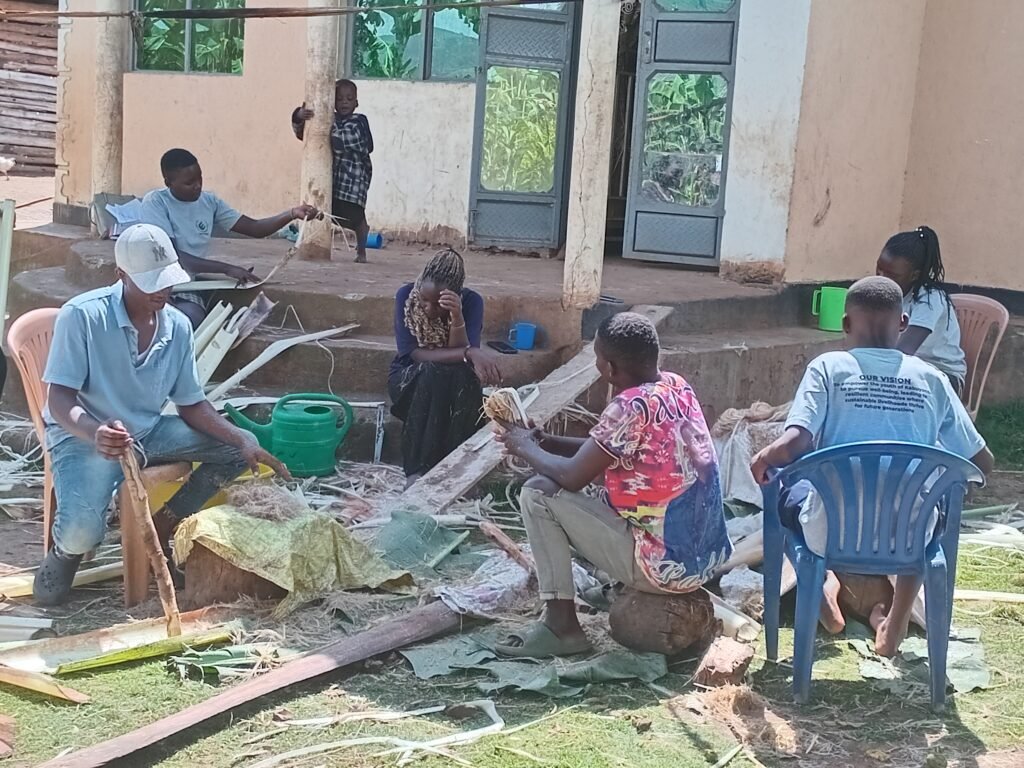
The Jukye BananaPak team working together outside the workshop in Kabuyanda, Isingiro District
Our story

Jukye means “remember us”. The company is named after a sentence, said once, that never went away.

Our founder, Phionah Nagaba, grew up in Kabuyanda as the fourth of seven children. She watched her parents work the banana plantations and still struggle to find school fees. Some weeks she and the neighbours’ children washed their school uniforms with papaya and pumpkin leaves, because that was what there was.

An uncle helped her stay in school. On the day she left the village, the first in her family to go to university, her friend Naomi told her: “Phionah, please remember us when you’re done with your education.”

That sentence followed her through every exam and every late night. It turned an education into an obligation, and the obligation into a company.

Nothing is wasted. No one forgotten. Every peel has a second life.
Our mission, in one line

The other half of the story was already lying on the ground. In Isingiro, banana peel piles up and rots in compounds and landfills while families a few doors away cannot afford soap. That contradiction is the business.

We buy the peel. We burn it to ash. We work the ash into a laundry bar formulated for hard water, and the rural women and young people who make it are from the same community that buys it. Along the way we prototyped things that did not work, fertiliser and sanitary pads among them, and kept the one that did.

Today Jukye BananaPak is at proof-of-concept stage, with a laboratory-validated formulation, a working production line in Kabuyanda and households who buy again. Every bar we make is an answer to what Naomi asked.

Our mission

Nothing is wasted.
No one forgotten.
Every peel has a second life.

Two commitments held at once. The human one: refusing to let rural women and young people be forgotten by economic opportunity. The environmental one: refusing to let banana waste go to waste.

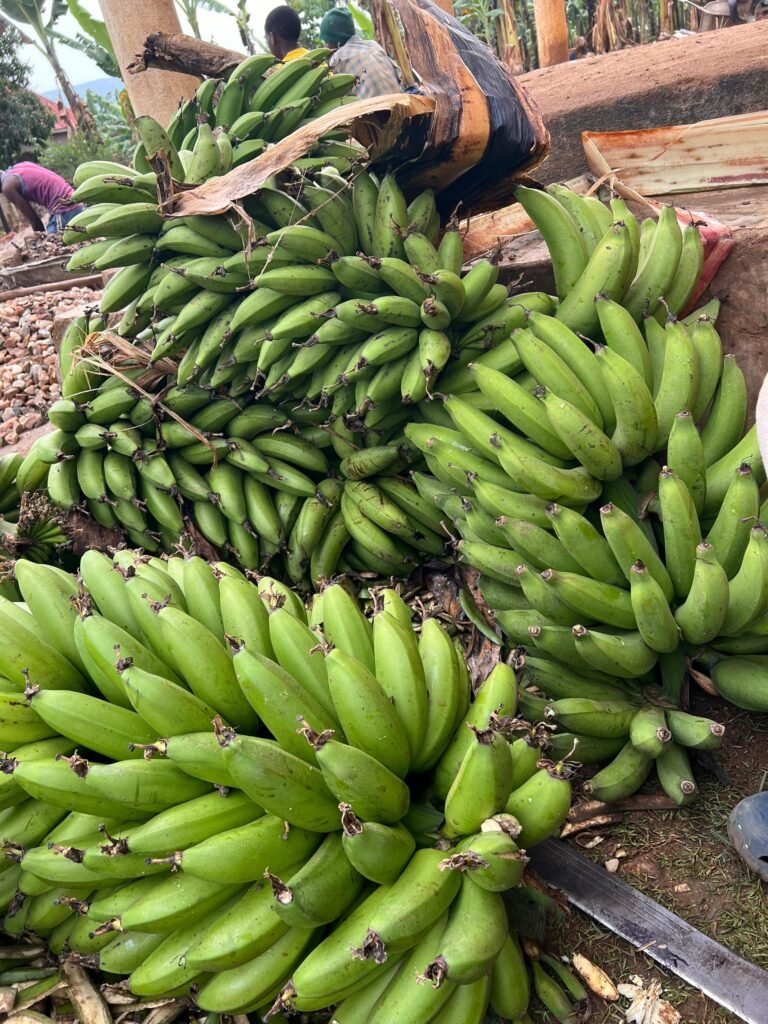
Green matooke banana bunches at a collection point, the raw material of the Jukye supply chain

Where we are going by 2036.

Our vision is to become East Africa’s leading circular economy enterprise built around banana waste. These are the targets we are working toward, not results we have reached.

3 million
households and 5,000 institutional partners reached across East Africa
5,000
jobs created for rural young people and women
30,000
farmers earning from banana waste they once burned or discarded
50,000
tonnes of banana waste upcycled into high-value products

The path is deliberate. Prove a repeatable model in Isingiro, expand into neighbouring districts with the same conditions, then scale across the region. Every step builds on something already validated.

What we hold to.

Six values, each one a decision-making filter rather than a poster on a wall.

Quality

Our soap has to perform the same way every batch. In a small community one bad batch ends relationships that took years to build, so quality is not a feature, it is the floor.

Integrity

We say what is proven and we say what is still in trial. Credibility is earned through evidence, not aspiration, and the difference matters most to the people closest to us.

Innovation

We started with peel, not capital. Resourcefulness is the method: find the value in what everyone else overlooks, then test it before scaling it.
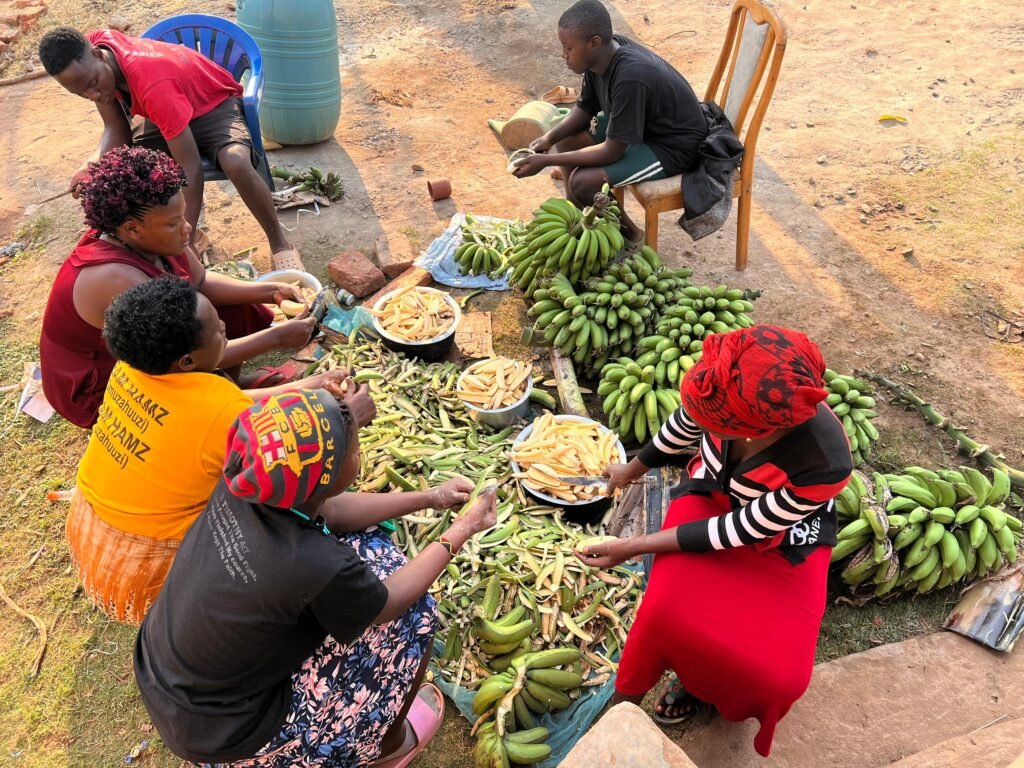
Members of the Jukye team sitting together to peel green banana for the day’s production

Sustainability

Waste is wealth. Our raw material is what the plantation throws away, so growing the business means diverting more of it rather than taking more from the land.

Community

Community first, sustainable impact second, growth follows. If an opportunity does not benefit the farmers, women and young people of this district, we do not take it.

Responsibility

Every job done with dignity is a job done well. Dignity is not something we hand out, it is something we recognise in work others dismiss as waste collection.
The intention

What we are trying to change.

People

Work that lets someone stay near their family and still earn, instead of migrating to a city to look for it.

Communities

A local business whose money circulates inside the district rather than leaving it at the first opportunity.

Environment

Agricultural waste diverted from compounds and landfill into a product households use every week.

Local enterprise

Proof that a rural manufacturing business can be built from what is already here, and can pay its own way.

Skills

Production, quality control, packing and distribution, taught on site and owned by the people doing the work.

Economic opportunity

A market for something that had none, so a harvest keeps earning after the fruit has already been sold.

Recognition

  • VivaTech 2026 Public Prize
  • HEC Paris WE4G 2026 Laureate
  • BeVisioneers, Mercedes-Benz Fellowship and Pioneer Project Scholarship
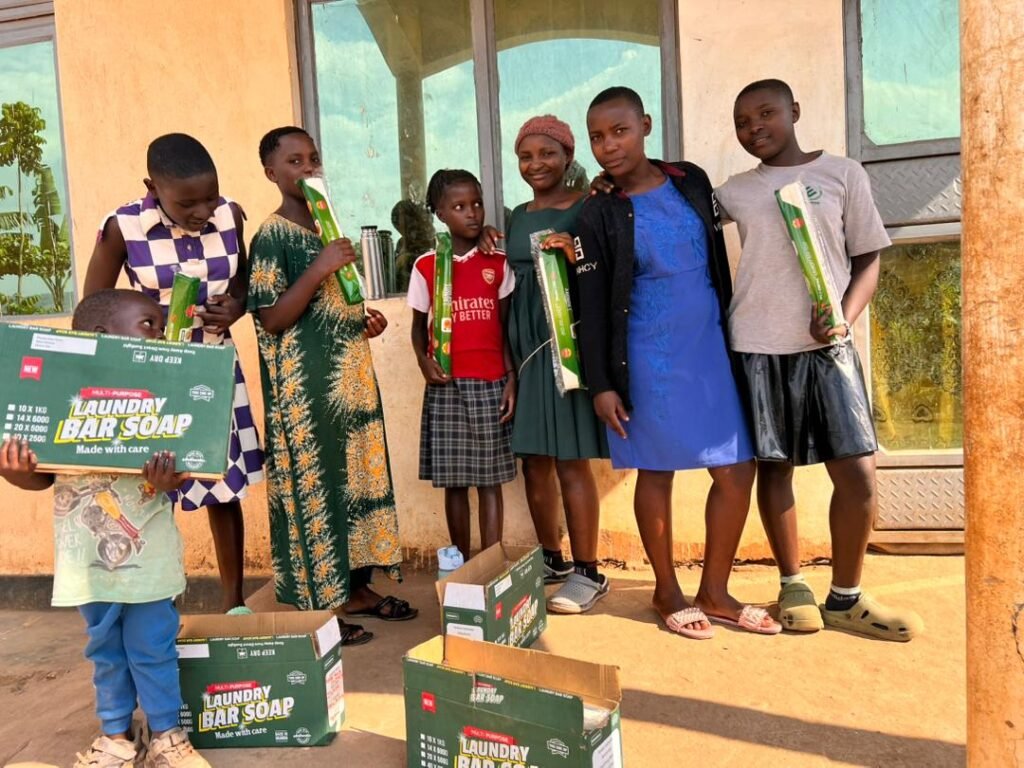
Young people from Isingiro District holding sleeved Jukye bars ready for distribution

Let’s create impact together.

Whether you are a customer, a distributor, a partner organisation or a potential collaborator, we would like to hear from you.